


[Nov-2025] Pulmonary Function Technician RPFT Exam Practice Dumps
2025 RPFT Premium Files Test pdf - Free Dumps Collection
NEW QUESTION # 26
A 54-year-old male who smokes presents to the pulmonary laboratory for chronic cough and dyspnea on exertion. PFT and blood gas results show the following: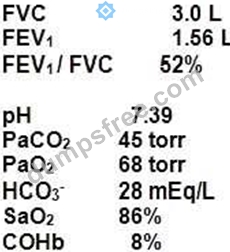
Which of the following should the pulmonary function technologist recommend?
- A. Trial of varenicline (Chantix)
- B. Lung volume measurement
- C. Oxygen therapy with exercise
- D. DLco measurement
Answer: D
NEW QUESTION # 27
When using a variable pressure plethysmograph, a leak in the door seal that develops subsequent to calibration will cause underestimation of
- A. Raw
- B. VTG
- C. Alveolar pressure
- D. vital capacity
Answer: C
Explanation:
Explanation
NEW QUESTION # 28
At maximum exercise, a 24-year-old patient's heart rate is 150/min with a VO2 of 750 mUmin. The calculated
02 pulse is most consistent with which of the following?
- A. cystic fibrosis
- B. achievement of anaerobic threshold
- C. cardiomyopathy
- D. deconditioning
Answer: A
NEW QUESTION # 29 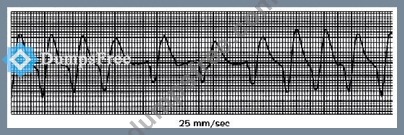
The ECG above is recorded during the recovery phase immediately following termination of an ergo meter exercise study. A pulmonary function technologist should
- A. Check the electrode connections
- B. Have the patient lie down
- C. Continue the cool-down phase
- D. Initiate chest compressions
Answer: D
NEW QUESTION # 30
Successive peak flow measurements made with a peak flowmeter on a subject previously diagnosed as having asthma yield the following results: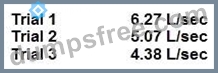
Which of the following is the best explanation for these?
- A. Improper calibration of the peak flowmeter
- B. Condensation of moisture in the peak flowmeter
- C. Increasing airways resistance in the subject
- D. Normal response
Answer: C
NEW QUESTION # 31 
Which of the above patterns illustrates the effect of increasing temperature in the plethysmograph during airways resistance measurement?
- A. 0
- B. 1
- C. 2
- D. 3
Answer: D
NEW QUESTION # 32
An arterial blood gas performed prior to exercise on a 45-year-old patient shows the following results: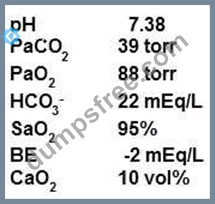
A pulmonary function technologist should conclude that the patient's
- A. Dead space ventilation is above normal.
- B. Hemoglobin level is below normal.
- C. Values are within normal limits.
- D. Alveolar ventilation is above normal.
Answer: B
NEW QUESTION # 33
A subject has the following values reported:
What is the SGAW?
- A. 1.25
- B. 0.40
- C. 0.20
- D. 0.80
Answer: A
NEW QUESTION # 34
Biological control data are obtained for lung volumes by plethysmography. The following results are obtained: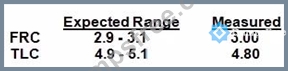
A pulmonary function technologist should repeat the test instructing the individual to
- A. Inhale to TV
- B. Pant at 40 to 50 Hz
- C. Pant at 90 to 100 Hz
- D. Inhale to TLC
Answer: D
NEW QUESTION # 35
The following results are obtained from an adult patient:
Which of the following is the best interpretation of these values?
- A. Small airway disease
- B. Airways obstruction
- C. Combined obstruction/restriction
- D. Normal values
Answer: A
NEW QUESTION # 36
A smoking cessation program using a nicotine patch is started for all smokers in a factory. Results revealed that smokers who reported they had quit had exhaled carbon monoxide levels less than 6 ppm. A pulmonary function technologist should conclude that
- A. A different method of smoking cessation should be offered to improve outcomes.
- B. The program was effective in accomplishing smoking cessation.
- C. The smokers were not being truthful about smoking cessation.
- D. The smokers had refrained from smoking for the previous 6 hours.
Answer: B
NEW QUESTION # 37
Using a peak flowmeter, a pulmonary function technologist obtains the following:
The technologist should
- A. Report the average of the two best efforts.
- B. Conclude that bronchodilatation has occurred.
- C. Report the patient's peak flow as 750 L/min.
- D. Perform at least one more peak flow trial.
Answer: D
NEW QUESTION # 38 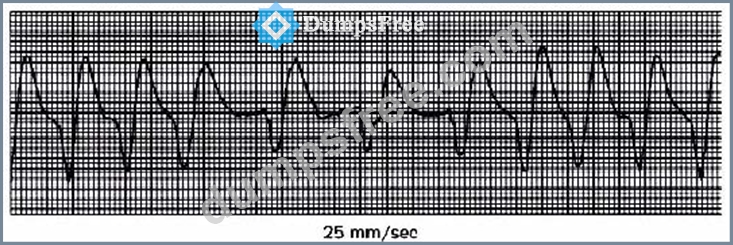
The ECG above is recorded during the recovery phase immediately following termination of an ergo meter exercise study. A pulmonary function technologist should
- A. Check the electrode connections
- B. Have the patient lie down
- C. Continue the cool-down phase
- D. Initiate chest compressions
Answer: D
NEW QUESTION # 39
A 66-year-old female performs spirometry with the following results: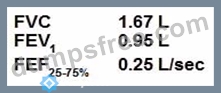
The patient most likely has
- A. Obstructive lung disease.
- B. Restrictive lung disease.
- C. Normal pulmonary function.
- D. Pulmonary hypertension.
Answer: B
NEW QUESTION # 40
Which of the following information reported from a recent methacholine challenge test best summarizes the patient's bronchial hyperresponsiveness?
- A. postbronchodilator recovery FEV1=106% baseline
- B. diluent FEV1= 92% predicted
- C. patient reported chest tightness and a cough
- D. PC20= 2.3 mg/mL
Answer: C
NEW QUESTION # 41
During the calibration and set-up of the metabolic stress testing system for a patient breathing supplemental oxygen, which of the following gas concentrations will ensure accurate calibration of the system?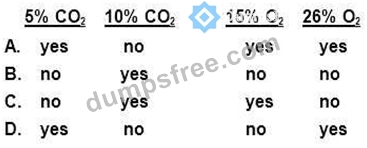
- A. Option A
- B. Option D
- C. Option B
- D. Option C
Answer: B
NEW QUESTION # 42
The following biologic control data ranges were established: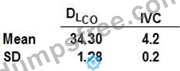
The following additional data were obtained when assessing the equipment:
Which of the following should a pulmonary function technologist do?
- A. Continue testing patients.
- B. Change the DLco CO analyzer.
- C. Check the flow sensor.
- D. Change the CO2 and H2O absorbers.
Answer: C
NEW QUESTION # 43 
Which of the above patterns illustrates the effect of increasing temperature in the plethysmograph during airways resistance measurement?
- A. 0
- B. 1
- C. 2
- D. 3
Answer: D
NEW QUESTION # 44
A 12-year-old patient completed an evaluation for exercise-induced asthma in the pulmonary function laboratory. The patient completed six minutes of exercise on a treadmill with a heart rate of 145 to 150/min. The following spirometry data werecollected: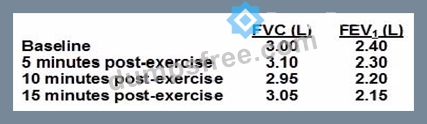
A pulmonary function technologist should conclude that the exercise test is
- A. Inadequate workload with a negative response
- B. Inadequate workload with a positive response
- C. Adequate workload with a positive response
- D. Adequate workload with a negative response
Answer: C
NEW QUESTION # 45
The following data are observed during an exercise test: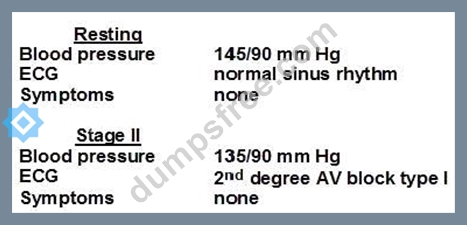
Which of the following should a pulmonary function technologist do?
- A. Discontinue the test and ensure patient safety.
- B. Continue the test until the patient is symptomatic.
- C. Discontinue the test after the next stage.
- D. Continue the test until the patient reaches maximal tolerance.
Answer: A
NEW QUESTION # 46
Which of the following problems may be identified by using an isothermal lung analog to perform quality control on a body plethysmograph? 1.Improperly calibrated mouth pressure transducer 2.Obstructed or perforated pneumotachometer 3.Increase in mechanical resistance 4.Malfunctioning box pressure transducer
- A. 1 and 2 only
- B. 2 and 3 only
- C. 3 and 4 only
- D. 1 and 4 only
Answer: D
NEW QUESTION # 47
The following data are observed during an exercise test: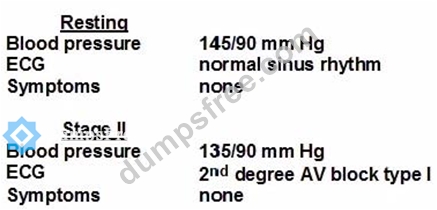
Which of the following should a pulmonary function technologist do?
- A. Discontinue the test and ensure patient safety.
- B. Continue the test until the patient is symptomatic.
- C. Discontinue the test after the next stage.
- D. Continue the test until the patient reaches maximal tolerance.
Answer: A
NEW QUESTION # 48
Successive peak flow measurements made with a peak flowmeter on a subject previously diagnosed as having asthma yield the following results: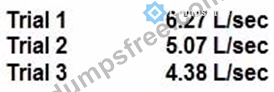
Which of the following is the best explanation for these?
- A. Improper calibration of the peak flowmeter
- B. Condensation of moisture in the peak flowmeter
- C. Increasing airways resistance in the subject
- D. Normal response
Answer: C
NEW QUESTION # 49
......
Get ready to pass the RPFT Exam right now using our Pulmonary Function Technician Exam Package: https://dumpstorrent.dumpsfree.com/RPFT-valid-exam.html